THE FIRST PROBLEM WAS THE CARD CATALOGUE
At 11:59 p.m., in a library that appeared only to people who had ever said “just one more chapter,” the books staged an intervention.
The books had grievances. The fantasy novels were furious about being abandoned at chapter seventeen. The biographies wanted everyone to stop calling them “light reading.” The cookbooks had filed a formal complaint against people who bookmarked recipes and then ordered takeout.
And somewhere in the velvet-dark romance aisle, a paperback dramatically fainted because someone had folded down its corner.
ENTER: THE HEAD LIBRARIAN OF QUESTIONABLE DECISIONS
Madame Marginalia materialized between two shelves wearing reading glasses on a chain, an elaborate burgundy gown, and the expression of a woman who had personally seen 400 years of regrettable book-club picks.
“Who,” she demanded, tapping a gilded ruler against the floor, “has been buying books faster than they can read them?”
Every patron raised a hand. A ghost raised two.
“Excellent,” she said. “You are all members in good standing.”
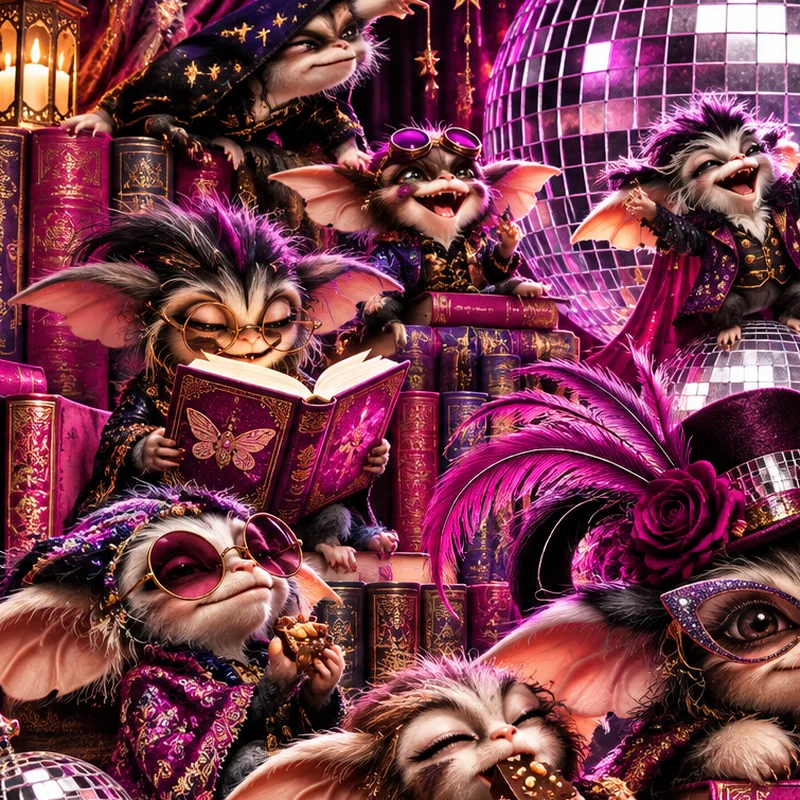
The chandeliers brightened. Two gremlin librarians in rhinestone readers burst from behind the returns desk and served the rebellious books a strike notice on the backs of expired library cards. The library’s gargoyles began trading recommendations. Someone asked whether audiobooks counted. Madame Marginalia stared over her glasses until the questioner feared for their life.
“Of course they count,” she said. “Stories are not an endurance contest for eyeballs.”
THE RULES OF THE FORBIDDEN LIBRARY
The library had only three rules. First, reading was for curiosity, comfort, pleasure, learning, or whatever else moved you. Second, nobody owed the world a finished book just because they started it. Third, anyone caught treating reading as a competitive personality trait would be assigned to alphabetize the spell books by scent.
At midnight, Madame Marginalia opened the great doors. The patrons wandered home holding stories they loved, stories they might love someday, and the radical notion that their reading lives belonged to them.
The abandoned books? They formed a support group. Naturally, there was a waitlist.